Tax Audit Extension 2026: Complete Business Compliance Checklist Before 21 October
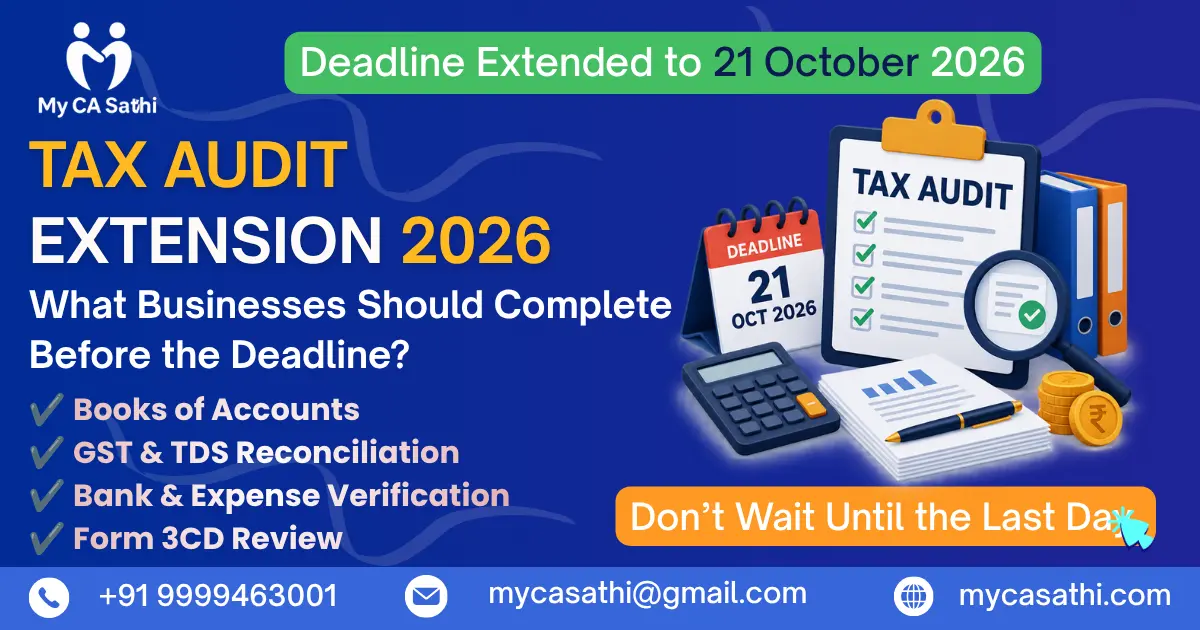
The tax audit deadline for applicable taxpayers for AY 2026-27 has been extended to 21 October 2026. While the extension gives businesses additional time, it is important to use this period to complete pending records, reconciliations and tax audit requirements.
Businesses should not wait until the last day. A proper review of books of accounts, GST records, TDS details, expenses and other supporting documents can help reduce errors during the tax audit process.
What Is the Tax Audit Extension for 2026?
For Assessment Year (AY) 2026-27, the tax audit report filing deadline has been extended from 30 September 2026 to 21 October 2026 for taxpayers covered by the applicable tax-audit provisions.
The extension provides additional time to complete the tax audit process and submit the required report.
However, businesses should first confirm whether the extension applies to their specific case and whether any other applicable compliance deadline needs to be considered separately.
What Should Businesses Complete Before 21 October?
1. Finalise Books of Accounts
Make sure your books are updated and properly reconciled.
Review:
- Sales and purchase entries
- Cash and bank transactions
- Journal entries
- Debtors and creditors
- Expenses
- Fixed assets
- Loans and advances
- Closing balances
Any unexplained or unreconciled differences should be investigated before the audit is finalised.
2. Reconcile GST Records
GST data should be compared with the books of accounts.
Businesses should review:
- Sales as per books vs GST returns
- Purchases
- Input Tax Credit
- Output GST
- Credit notes and debit notes
- GSTR-1 and GSTR-3B figures
- GST liability
Differences should be identified and properly explained or corrected wherever required.
3. Check TDS Records
TDS information should also be reviewed before completing the tax audit.
Check:
- TDS deducted
- TDS deposited
- TDS returns filed
- TDS payable
- Form 26AS
- AIS/TIS information
- TDS-related expenses
Proper reconciliation can help identify missing deductions, incorrect entries or outstanding balances.
4. Review Business Expenses
Businesses should verify whether major expenses are properly recorded and supported by relevant documents.
Keep records such as:
- Invoices
- Bills
- Payment proofs
- Agreements
- Expense vouchers
- Supporting documents
Special attention should be given to expenses where tax deduction, TDS or other compliance requirements may apply.
5. Verify Fixed Assets and Depreciation
Review your fixed asset records before the tax audit is completed.
Check:
- Opening asset balances
- New additions
- Asset disposals
- Date of purchase/use
- Depreciation calculation
- Closing written-down value
The fixed asset schedule should agree with the books and supporting records.
6. Reconcile Bank Accounts
Bank reconciliation is another important pre-audit check.
Compare bank statements with the accounting records and identify:
- Unpresented cheques
- Direct bank charges
- Interest credited/debited
- Bank transfers
- Unrecorded transactions
- Other reconciliation differences
Old unreconciled items should be reviewed before finalisation.
7. Review Debtors and Creditors
Businesses should review outstanding receivables and payables.
Check whether:
- Balances are correctly recorded
- Old outstanding amounts are verified
- Credit/debit notes are accounted for
- Customer/vendor balances are reconciled
- Required confirmations are available
This can help identify accounting errors before the audit report is prepared.
Documents Businesses Should Keep Ready
Before the tax audit is finalised, businesses should keep important records organised, including:
- Books of accounts
- Trial balance
- Profit & Loss Account
- Balance Sheet
- Bank statements
- GST returns
- GST reconciliation
- TDS returns
- Form 26AS/AIS information
- Sales and purchase records
- Expense invoices
- Fixed asset register
- Debtors and creditors details
- Loan statements
- Relevant agreements and supporting documents
The exact documents required can vary depending on the nature and size of the business.
Don't Leave Form 3CD Review Until the Last Day
For taxpayers subject to tax audit, the information reported in Form 3CD should be carefully reviewed.
Businesses should verify whether the information relating to items such as:
- Accounting records
- Turnover
- Expenses
- Depreciation
- Loans and payments
- TDS/TCS
- GST-related information
- Other applicable reporting requirements
is accurate and supported by the underlying records.
Any mismatch should be discussed and resolved before the tax audit report is finalised.
Common Mistakes to Avoid Before 21 October
Businesses should avoid:
❌ Waiting until the last few days to start reconciliation
❌ Ignoring GST and books differences
❌ Leaving old bank reconciliation items unresolved
❌ Not checking TDS records
❌ Missing supporting documents for expenses
❌ Incorrect fixed asset/depreciation details
❌ Not reviewing Form 3CD information
❌ Assuming the extension automatically resolves all compliance requirements
21 October 2026: Final Review Checklist
Before the applicable tax audit deadline, businesses should confirm:
✔ Books of accounts updated
✔ Bank accounts reconciled
✔ GST records reconciled
✔ TDS records checked
✔ Expenses verified
✔ Fixed assets reviewed
✔ Debtors & creditors reviewed
✔ Supporting documents organised
✔ Form 3CD information verified
✔ Tax audit report reviewed and filed as applicable
Conclusion
The 21 October 2026 extension provides additional time for eligible taxpayers to complete their tax audit requirements. Businesses should use this time for a structured review rather than waiting until the final day.
Completing books, GST reconciliation, TDS verification, bank reconciliation, expense verification and Form 3CD review in advance can make the tax audit process more organised and help identify discrepancies before filing.
Need Help With Tax Audit Compliance?
MyCASathi | CA Ram Kumar Gupta can help businesses with tax audit preparation, accounting review, GST reconciliation, TDS verification and related tax compliance requirements.
📞 +91 99994 63001
📧 mycasathi@gmail.com
🌐 mycasathi.com
Get your records reviewed before the deadline.
Key Takeaways
- GST registration requirements depend on turnover and nature of business.
- Timely filing helps avoid unnecessary interest and late fees.
- Businesses should maintain proper invoices and supporting documents.
Important Note
Tax rules and compliance requirements may change from time to time. Always verify the applicable provisions before taking any action.
